Fauna de Vianos y la Sierra de Alcaraz: un paisaje lleno de vida
Hablar de la fauna de Vianos y de la Sierra de Alcaraz no es hablar solo de animales sueltos, sino de un territorio entero. Aquí la biodiversidad no depende de un único hábitat ni de una sola especie emblemática, sino de la combinación de barrancos, roquedos, pinares, encinares, matorrales, cultivos tradicionales, arroyos, riberas y relieve kárstico. Esa mezcla convierte a este sector del sur de Albacete en un paisaje especialmente rico desde el punto de vista faunístico.
Además, Vianos no debe entenderse como un punto aislado. Forma parte de un sistema serrano más amplio, conectado con espacios naturales de gran valor y con corredores ecológicos que ayudan a explicar por qué aquí encajan rapaces, mamíferos discretos, reptiles especializados, anfibios serranos y una comunidad notable de invertebrados. Por eso, cuando se habla de fauna local, conviene hacerlo con una idea clara: no todo está igualmente documentado a escala municipal, pero el valor ecológico del conjunto resulta evidente.
Un territorio que explica su propia fauna
La mejor manera de entender la fauna de Vianos y Alcaraz es leer el paisaje por capas.
Los roquedos, barrancos y cortados favorecen grandes aves rapaces, fauna rupícola y reptiles ligados a la piedra. Los pinares, encinares y matorrales mediterráneos ofrecen refugio a carnívoros, pequeños mamíferos, aves forestales y serpientes. Los arroyos, fuentes y riberas concentran anfibios, fauna acuática, peces autóctonos, reptiles de agua y especies indicadoras de buena calidad ecológica. Y el componente kárstico y subterráneo refuerza la importancia del territorio para murciélagos e invertebrados cavernícolas.
Eso significa que aquí la riqueza natural no se entiende bien con un listado rápido. Hay que verla como un mosaico.
Mamíferos: mucho más que lince, nutria y gato montés
El bloque de mamíferos es bastante más amplio de lo que a veces parece cuando solo se citan las especies más conocidas. En un paisaje serrano mediterráneo como este, lo lógico es esperar una comunidad mamífera diversa.
Entre los grandes ungulados encajan muy bien el ciervo rojo o venado (Cervus elaphus), el jabalí (Sus scrofa) y la cabra montés (Capra pyrenaica), todos compatibles con sierras de relieve variado, cobertura vegetal y zonas de refugio. En sectores concretos puede considerarse también el corzo (Capreolus capreolus) como especie posible, y el muflón (Ovis aries musimon) en contextos cinegéticos o de gestión, aunque estas dos últimas menciones conviene tratarlas con más prudencia.
Dentro de los lagomorfos, el conejo de monte (Oryctolagus cuniculus) es especialmente importante, no solo por su presencia razonable en el territorio, sino por su papel clave como presa básica para numerosos depredadores y rapaces. Junto a él encaja perfectamente la liebre ibérica (Lepus granatensis), típica de laderas abiertas, cultivos y mosaicos rurales.
En cuanto a los carnívoros, el territorio resulta muy favorable para el zorro rojo (Vulpes vulpes), el tejón (Meles meles), la gineta (Genetta genetta), la garduña (Martes foina), la comadreja (Mustela nivalis), el turón europeo (Mustela putorius) en sectores adecuados, la nutria (Lutra lutra) en ríos y arroyos bien conservados, y el gato montés (Felis silvestris) en barrancos, manchas de vegetación y zonas tranquilas.
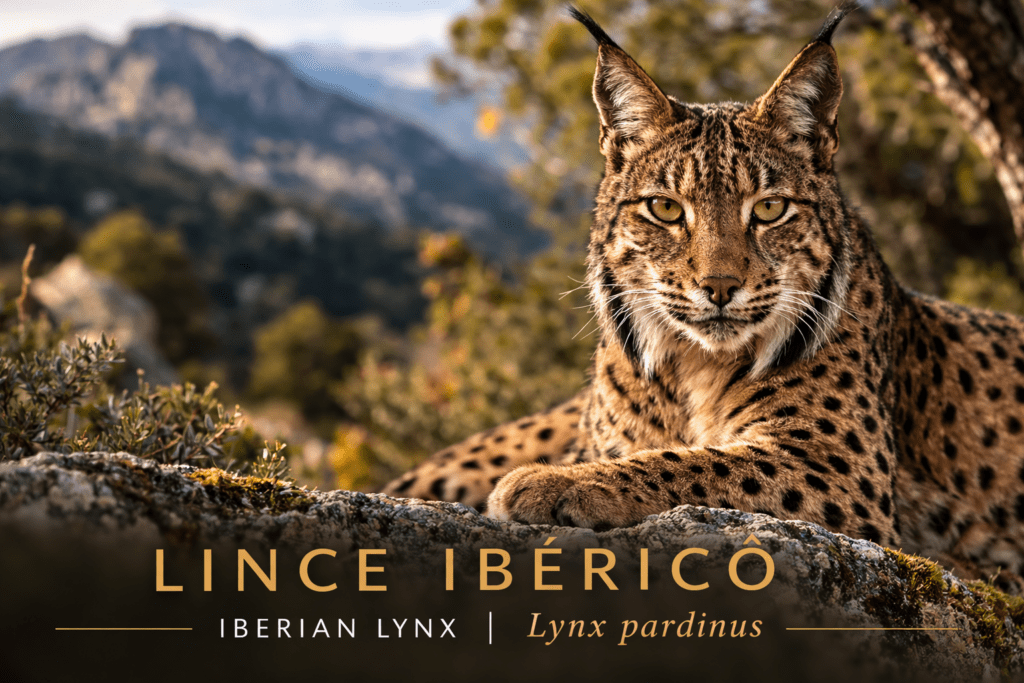
A una escala de mayor interés conservacionista destaca también el lince ibérico (Lynx pardinus), que aquí no debe venderse como promesa de avistamiento fácil, sino como especie de enorme valor ecológico ligada al paisaje mediterráneo bien estructurado y a la conectividad regional del territorio.
El bloque de roedores y pequeños mamíferos es uno de los más infrarrepresentados y, al mismo tiempo, de los más ricos. Aquí tienen mucho sentido la ardilla roja (Sciurus vulgaris), el lirón careto (Eliomys quercinus), el topillo de Cabrera (Microtus cabrerae), el ratón de campo (Apodemus sylvaticus), el ratón moruno (Mus spretus) y probablemente otros micromamíferos ligados a herbazales, ribazos, matorrales, pinares y riberas. En medios húmedos adecuados podría incluso considerarse la rata de agua (Arvicola sapidus) como especie plausible.
También deben tenerse en cuenta varios insectívoros, como el erizo europeo (Erinaceus europaeus) y distintas musarañas (Crocidura spp., Sorex spp.), además de posibles topos según suelos y humedad.
Por último, los murciélagos refuerzan mucho el valor natural del área. El entorno kárstico y forestal favorece especies como el murciélago patudo (Myotis capaccinii), el murciélago grande de herradura (Rhinolophus ferrumequinum), el murciélago pequeño de herradura (Rhinolophus hipposideros), el murciélago de cueva (Miniopterus schreibersii) y el murciélago ratonero grande (Myotis myotis), todos ellos ligados a cuevas, refugios tranquilos, bosques y puntos de agua.
Aves: el grupo más visible y más espectacular
Si hay un grupo que define rápido la riqueza natural de la zona, ese es el de las aves. El relieve de Vianos y Alcaraz favorece la presencia o el encaje ecológico de rapaces, aves rupícolas, aves de ribera y especies de matorral y espacios abiertos.
Entre las aves más llamativas destacan el águila imperial ibérica (Aquila adalberti), el águila perdicera (Aquila fasciata), el águila real (Aquila chrysaetos), el buitre leonado (Gyps fulvus), el buitre negro (Aegypius monachus), el alimoche común (Neophron percnopterus), el halcón peregrino (Falco peregrinus) y el búho real (Bubo bubo).
Estas especies ayudan a entender muy bien la relación entre relieve y fauna. Donde hay cortados, laderas abiertas, altura y tranquilidad, hay espacio para grandes rapaces y aves rupícolas.
Junto a ellas aparecen especies como la chova piquirroja (Pyrrhocorax pyrrhocorax), muy ligada a roquedos y ambientes serranos, o la collalba negra (Oenanthe leucura), típica de medios pedregosos y soleados.
En las riberas y cursos de agua, una especie muy representativa es el martín pescador común (Alcedo atthis), ideal para explicar el valor de los arroyos y ríos bien conservados.
Y en el matorral y el mosaico agroforestal también encajan la curruca rabilarga (Sylvia undata), la tórtola europea (Streptopelia turtur), la totovía (Lullula arborea) y la cogujada común (Galerida cristata).
Con mucha más prudencia puede citarse el quebrantahuesos (Gypaetus barbatus) como presencia ocasional de gran interés, nunca como residente clara del área.
Reptiles: un bloque clave que no debe quedarse corto
El apartado de reptiles es uno de los más importantes para que el retrato del territorio no quede cojo.
Entre los reptiles mejor encajados destaca el galápago leproso (Mauremys leprosa), una tortuga autóctona de agua dulce propia de ríos, remansos y charcas. También es especialmente relevante la lagartija de Valverde (Algyroides marchi), uno de los reptiles más singulares del área, muy ligada a ambientes serranos pedregosos, relativamente frescos y con buenos refugios.
Serpientes: el grupo que casi siempre falta en los listados pobres
Si algo llama la atención en muchos textos sobre fauna local es la ausencia de serpientes. En un territorio como Vianos y Alcaraz eso no debe interpretarse como ausencia real, sino como laguna documental.
En una sierra con roquedos, matorral, pinares, laderas pedregosas, cultivos tradicionales y cursos de agua, lo normal es una comunidad de ofidios relativamente diversa.
Las especies más probables o plausibles por ecología del territorio son:
- Culebra bastarda (Malpolon monspessulanus)
- Culebra de escalera (Zamenis scalaris)
- Culebra viperina (Natrix maura)
- Culebra de collar ibérica (Natrix astreptophora)
- Culebra lisa meridional (Coronella girondica)
- Víbora hocicuda (Vipera latastei) como especie probable pendiente de mejor confirmación local
- Con mayor prudencia, culebra de herradura (Hemorrhois hippocrepis)
- Y en sectores más frescos, culebra lisa europea (Coronella austriaca)
La idea importante aquí es clara: faltaban serpientes no porque no las haya, sino porque no se habían incorporado bien al retrato ecológico del territorio.
Anfibios: pequeños, discretos y muy importantes
Los anfibios suelen pasar desapercibidos, pero en una sierra con manantiales, arroyos, fuentes y pequeñas zonas húmedas tienen mucho valor.
Entre los más razonables del área destacan el sapillo pintojo ibérico (Discoglossus galganoi), ligado a charcas temporales, arroyos pequeños y puntos de agua someros, y el sapo partero bético (Alytes dickhilleni), una de las especies más interesantes por su relación con ambientes húmedos serranos.
Lo más prudente es reconocer que el conjunto de anfibios probablemente sea más amplio de lo que reflejan los listados básicos. Su baja presencia en documentos generales suele responder más a falta de muestreo que a una baja riqueza real.
Peces: un bloque que necesita más precisión
El grupo de peces conviene tratarlo con prudencia, porque algunas fuentes divulgativas usan nombres comunes sin concretar bien la especie científica.
El pez mejor asentado en el bloque trabajado es la colmilleja (Cobitis paludica), asociada a cursos de agua con fondos blandos, vegetación acuática y cierta calidad ecológica.
También aparecen menciones a cacho y barbo gitano, pero en estos casos conviene hablar de taxones pendientes de mejor precisión.
La trucha común (Salmo trutta) encaja ecológicamente en cabeceras frías, limpias y oxigenadas, pero debe presentarse como especie probable o pendiente de mejor ajuste local, no como confirmación rotunda.
Invertebrados: los grandes olvidados que sostienen la riqueza real
Los invertebrados suelen ser los grandes ausentes en los textos divulgativos, y sin embargo forman una parte esencial del valor natural del territorio.
Entre los más destacados figuran el cangrejo de río autóctono (Austropotamobius pallipes), ligado a aguas limpias y refugios bajo piedra; el caballito del diablo de Mercurio (Coenagrion mercuriale), muy asociado a arroyos bien conservados; la doncella de la madreselva (Euphydryas aurinia); y la mariposa isabelina (Graellsia isabellae / Actias isabelae), uno de los insectos más espectaculares del área.
También tienen interés el mántido ibérico (Apteromantis aptera) y Saga pedo, ambos ligados a medios abiertos, soleados y con estructura vegetal diversa.
A todo eso hay que sumar la fauna cavernícola, especialmente importante en sistemas kársticos y medios subterráneos.
Qué grupos definen mejor la fauna de Vianos y Alcaraz
Si hubiera que resumir el conjunto de la fauna de la zona de forma clara, se podría hacer así:
Fauna de ríos y riberas
Nutria, martín pescador, galápago leproso, anfibios, colmilleja, cangrejo de río y odonatos de interés.
Fauna de roquedos y barrancos
Águila perdicera, águila real, halcón peregrino, búho real, collalba negra, chova piquirroja y lagartija de Valverde.
Fauna del monte mediterráneo y mosaicos rurales
Lince ibérico, gato montés, zorro, tejón, garduña, conejo, liebre, curruca rabilarga, culebra bastarda y culebra de escalera.
Fauna de cuevas y medios kársticos
Murciélagos e invertebrados cavernícolas.
Conclusión
La fauna de Vianos y la Sierra de Alcaraz no queda bien representada si solo se habla de lince, nutria, rapaces y algunos reptiles singulares. El retrato real del territorio es mucho más amplio.
Aquí también hay que contar ciervos, jabalíes, cabras monteses, conejos, liebres, zorros, tejones, ginetas, garduñas, ardillas, lirones, topillos, ratones, erizos, musarañas, murciélagos, serpientes, anfibios, peces e invertebrados.
Sin ese bloque, el paisaje queda contado a medias.
Con él, ya empieza a parecer lo que realmente es: un territorio muy rico, complejo y vivo, donde la biodiversidad no depende de una sola especie espectacular, sino del equilibrio entre muchos hábitats conectados.
Listado compacto unificado de fauna de Vianos y Alcaraz
Mamíferos
- Lince ibérico (Lynx pardinus)
- Nutria (Lutra lutra)
- Gato montés (Felis silvestris)
- Zorro rojo (Vulpes vulpes)
- Tejón (Meles meles)
- Gineta (Genetta genetta)
- Garduña (Martes foina)
- Comadreja (Mustela nivalis)
- Turón europeo (Mustela putorius)
- Ciervo rojo o venado (Cervus elaphus)
- Jabalí (Sus scrofa)
- Cabra montés (Capra pyrenaica)
- Corzo (Capreolus capreolus, posible)
- Muflón (Ovis aries musimon, posible en contexto cinegético)
- Conejo de monte (Oryctolagus cuniculus)
- Liebre ibérica (Lepus granatensis)
- Ardilla roja (Sciurus vulgaris)
- Lirón careto (Eliomys quercinus)
- Topillo de Cabrera (Microtus cabrerae)
- Ratón de campo (Apodemus sylvaticus)
- Ratón moruno (Mus spretus)
- Rata de agua (Arvicola sapidus, plausible)
- Erizo europeo (Erinaceus europaeus)
- Musarañas (Crocidura spp., Sorex spp.)
- Murciélago patudo (Myotis capaccinii)
- Murciélago grande de herradura (Rhinolophus ferrumequinum)
- Murciélago pequeño de herradura (Rhinolophus hipposideros)
- Murciélago de cueva (Miniopterus schreibersii)
- Murciélago ratonero grande (Myotis myotis)
Aves
- Águila imperial ibérica (Aquila adalberti)
- Águila perdicera (Aquila fasciata)
- Águila real (Aquila chrysaetos)
- Buitre leonado (Gyps fulvus)
- Buitre negro (Aegypius monachus)
- Alimoche común (Neophron percnopterus)
- Halcón peregrino (Falco peregrinus)
- Búho real (Bubo bubo)
- Martín pescador común (Alcedo atthis)
- Collalba negra (Oenanthe leucura)
- Chova piquirroja (Pyrrhocorax pyrrhocorax)
- Curruca rabilarga (Sylvia undata)
- Tórtola europea (Streptopelia turtur)
- Totovía (Lullula arborea)
- Cogujada común (Galerida cristata)
- Quebrantahuesos (Gypaetus barbatus, presencia ocasional)
Reptiles
- Galápago leproso (Mauremys leprosa)
- Lagartija de Valverde (Algyroides marchi)
- Culebra bastarda (Malpolon monspessulanus)
- Culebra de escalera (Zamenis scalaris)
- Culebra viperina (Natrix maura)
- Culebra de collar ibérica (Natrix astreptophora)
- Culebra lisa meridional (Coronella girondica)
- Víbora hocicuda (Vipera latastei)
- Culebra de herradura (Hemorrhois hippocrepis, plausible)
- Culebra lisa europea (Coronella austriaca, plausible)
Anfibios
- Sapillo pintojo ibérico (Discoglossus galganoi)
- Sapo partero bético (Alytes dickhilleni)
Peces
- Colmilleja (Cobitis paludica)
- Cacho (taxón pendiente de precisar)
- Barbo gitano (taxón pendiente de precisar)
- Trucha común (Salmo trutta, probable)
Invertebrados
- Cangrejo de río autóctono (Austropotamobius pallipes)
- Caballito del diablo de Mercurio (Coenagrion mercuriale)
- Doncella de la madreselva (Euphydryas aurinia)
- Mariposa isabelina (Graellsia isabellae / Actias isabelae)
- Mántido ibérico (Apteromantis aptera)
- Saga pedo
- Invertebrados cavernícolas del sistema kárstico del entorno
Creado y editado por Miguel Delgado Paris · El Jardín de Vianos
Wildlife of Vianos and the Sierra de Alcaraz: a landscape full of life
Talking about the wildlife of Vianos and the Sierra de Alcaraz does not mean speaking only about individual animals, but about an entire territory. Here biodiversity does not depend on one single habitat or on one emblematic species alone, but on the combination of ravines, rocky slopes, pine woods, holm oak patches, scrubland, traditional farmland, streams, riverbanks and karst relief. That mixture makes this part of southern Albacete especially rich from a wildlife point of view.
Vianos should not be understood as an isolated point either. It forms part of a wider mountain system, connected to valuable natural areas and ecological corridors that help explain why birds of prey, discreet mammals, specialised reptiles, mountain amphibians and a remarkable community of invertebrates all fit here. That is why, when speaking about local wildlife, one idea matters above all: not everything is equally documented at municipal scale, but the ecological value of the whole is clear.
A territory that explains its own wildlife
The best way to understand the wildlife of Vianos and Alcaraz is to read the landscape in layers.
Rocky slopes, ravines and cliffs favour large birds of prey, cliff-dwelling fauna and reptiles linked to stone. Pine woods, holm oak patches and Mediterranean scrubland offer shelter to carnivores, small mammals, woodland birds and snakes. Streams, springs and riverbanks concentrate amphibians, aquatic life, native fish, freshwater reptiles and species that indicate good ecological quality. And the karst and underground component reinforces the importance of the area for bats and cave-dwelling invertebrates.
This means that the natural richness here cannot be properly understood through a quick list. It has to be seen as a mosaic.
Mammals: much more than lynx, otter and wildcat
The mammal group is much broader than it may seem when only the best-known species are mentioned. In a Mediterranean mountain landscape like this one, what we should expect is a diverse mammal community.
Among the large ungulates, the red deer (Cervus elaphus), the wild boar (Sus scrofa) and the Iberian ibex (Capra pyrenaica) all fit very well, being fully compatible with mountain areas that offer varied relief, vegetation cover and shelter. In some sectors, the roe deer (Capreolus capreolus) may also be considered possible, while the mouflon (Ovis aries musimon) may appear in hunting or management contexts, although those two mentions should be treated more cautiously.
Within the lagomorphs, the European rabbit (Oryctolagus cuniculus) is especially important, not only because its presence is very plausible in the area, but because of its key ecological role as basic prey for many predators and birds of prey. Alongside it, the Iberian hare (Lepus granatensis) also fits perfectly, typical of open slopes, farmland and rural mosaics.
As for carnivores, the territory is very favourable for the red fox (Vulpes vulpes), the badger (Meles meles), the genet (Genetta genetta), the stone marten (Martes foina), the least weasel (Mustela nivalis), the European polecat (Mustela putorius) in suitable sectors, the otter (Lutra lutra) in well-preserved rivers and streams, and the wildcat (Felis silvestris) in ravines, vegetation patches and quiet areas.
At a broader conservation scale, the Iberian lynx (Lynx pardinus) also stands out. Here it should not be presented as an easy sighting, but as a species of great ecological value linked to well-structured Mediterranean landscapes and to the regional connectivity of the territory.
The group of rodents and small mammals is one of the most underrepresented and at the same time one of the richest. Species that make strong ecological sense here include the red squirrel (Sciurus vulgaris), the garden dormouse (Eliomys quercinus), the Cabrera’s vole (Microtus cabrerae), the wood mouse (Apodemus sylvaticus), the Algerian mouse (Mus spretus) and probably other micromammals linked to grasslands, field edges, scrubland, pine woods and riverbanks. In suitable wet habitats, the southern water vole (Arvicola sapidus) could even be considered plausible.
Several insectivores should also be taken into account, such as the European hedgehog (Erinaceus europaeus) and different shrews (Crocidura spp., Sorex spp.), as well as possible moles depending on soils and moisture.
Finally, bats strongly reinforce the natural value of the area. The karst and forest environment favours species such as the long-fingered bat (Myotis capaccinii), the greater horseshoe bat (Rhinolophus ferrumequinum), the lesser horseshoe bat (Rhinolophus hipposideros), the Schreiber’s bent-winged bat (Miniopterus schreibersii) and the greater mouse-eared bat (Myotis myotis), all of them linked to caves, quiet refuges, woodland and water points.
Birds: the most visible and spectacular group
If one group quickly defines the natural richness of the area, it is birds. The relief of Vianos and Alcaraz favours the presence or ecological fit of birds of prey, cliff-dwelling birds, waterside birds and species linked to scrubland and open spaces.
Among the most striking birds are the Iberian imperial eagle (Aquila adalberti), the Bonelli’s eagle (Aquila fasciata), the golden eagle (Aquila chrysaetos), the griffon vulture (Gyps fulvus), the cinereous vulture (Aegypius monachus), the Egyptian vulture (Neophron percnopterus), the peregrine falcon (Falco peregrinus) and the Eurasian eagle-owl (Bubo bubo).
These species help explain very clearly the relationship between relief and fauna. Where there are cliffs, open slopes, height and quiet, there is room for large birds of prey and cliff-dwelling birds.
Alongside them appear species such as the red-billed chough (Pyrrhocorax pyrrhocorax), strongly linked to rocky slopes and mountain environments, or the black wheatear (Oenanthe leucura), typical of stony and sunny habitats.
On riverbanks and along watercourses, one very representative species is the common kingfisher (Alcedo atthis), ideal for explaining the value of well-preserved streams and rivers.
And in scrubland and rural mosaics, the Dartford warbler (Sylvia undata), the European turtle dove (Streptopelia turtur), the woodlark (Lullula arborea) and the crested lark (Galerida cristata) also fit naturally.
With much greater caution, the bearded vulture (Gypaetus barbatus) may be mentioned as an occasional presence of great interest, never as a clearly resident species of the area.
Reptiles: a key group that should not be left incomplete
The reptile section is one of the most important if the portrait of the territory is not to feel incomplete.
Among the reptiles that fit best are the Spanish terrapin (Mauremys leprosa), a native freshwater turtle typical of rivers, pools and ponds, and especially the Valverde’s lizard (Algyroides marchi), one of the most singular reptiles of the area, strongly linked to stony, relatively cool mountain habitats with good shelter.
Snakes: the group that almost always goes missing from weak lists
If there is one thing that stands out in many texts on local wildlife, it is the absence of snakes. In a territory like Vianos and Alcaraz, that should not be interpreted as real absence, but as a documentary gap.
In a mountain area with rocky slopes, scrubland, pine woods, stony hillsides, traditional farmland and watercourses, what we should normally expect is a relatively diverse snake community.
The species most probable or plausible by ecological fit are:
- Montpellier snake (Malpolon monspessulanus)
- Ladder snake (Zamenis scalaris)
- Viperine snake (Natrix maura)
- Iberian grass snake (Natrix astreptophora)
- Southern smooth snake (Coronella girondica)
- Lataste’s viper (Vipera latastei) as a probable species pending better local confirmation
- With greater caution, the horseshoe whip snake (Hemorrhois hippocrepis)
- And in cooler sectors, the smooth snake (Coronella austriaca)
The key idea here is clear: snakes were missing not because they are absent, but because they had not been properly incorporated into the ecological portrait of the territory.
Amphibians: small, discreet and very important
Amphibians often go unnoticed, but in a mountain landscape with springs, streams, fountains and small wet areas they have considerable value.
Among the most reasonable species for the area are the Iberian painted frog (Discoglossus galganoi), linked to temporary ponds, small streams and shallow water points, and the Betic midwife toad (Alytes dickhilleni), one of the most interesting species because of its relationship with humid mountain environments.
The most prudent approach is to recognise that the amphibian community is probably broader than basic lists suggest. Their low visibility in general documents usually reflects lack of sampling rather than low real diversity.
Fish: a group that needs more precision
The fish group should be treated with caution, because some popular sources use common names without clearly specifying the scientific species.
The best-established fish in the material already worked is the southern Iberian spined-loach (Cobitis paludica), associated with watercourses that have soft bottoms, aquatic vegetation and a certain ecological quality.
There are also mentions of cacho and barbo gitano, but in these cases it is better to speak of taxa still pending better precision.
The brown trout (Salmo trutta) makes ecological sense in cold, clean and oxygen-rich headwaters, but it should be presented as a probable species or one pending better local adjustment, not as a firm confirmation.
Invertebrates: the great forgotten group that supports real richness
Invertebrates are often the great absentees in popular texts, and yet they form an essential part of the territory’s natural value.
Among the most notable are the white-clawed crayfish (Austropotamobius pallipes), linked to clean waters and shelter under stones; the southern damselfly (Coenagrion mercuriale), closely associated with well-preserved streams; the marsh fritillary (Euphydryas aurinia); and the Spanish moon moth (Graellsia isabellae / Actias isabelae), one of the most spectacular insects in the area.
The Iberian mantis (Apteromantis aptera) and Saga pedo are also of interest, both linked to open, sunny habitats with varied vegetation structure.
To all this we must add cave-dwelling fauna, especially important in karst systems and underground environments.
Which groups best define the wildlife of Vianos and Alcaraz
If the wildlife of the area had to be summarised clearly, it could be done like this:
Wildlife of rivers and riverbanks
Otter, kingfisher, Spanish terrapin, amphibians, spined-loach, crayfish and odonates of conservation interest.
Wildlife of rocky slopes and ravines
Bonelli’s eagle, golden eagle, peregrine falcon, eagle-owl, black wheatear, red-billed chough and Valverde’s lizard.
Wildlife of Mediterranean woodland and rural mosaics
Iberian lynx, wildcat, fox, badger, stone marten, rabbit, hare, Dartford warbler, Montpellier snake and ladder snake.
Wildlife of caves and karst environments
Bats and cave-dwelling invertebrates.
Conclusion
The wildlife of Vianos and the Sierra de Alcaraz is not well represented if we only speak about lynx, otter, birds of prey and a few singular reptiles. The true picture of the territory is much broader.
Here we also need to speak about deer, wild boar, ibex, rabbits, hares, foxes, badgers, genets, martens, squirrels, dormice, voles, mice, hedgehogs, shrews, bats, snakes, amphibians, fish and invertebrates.
Without that block, the landscape is only half told.
With it, it starts to look like what it really is: a very rich, complex and living territory, where biodiversity does not depend on one spectacular species alone, but on the balance between many connected habitats.
Unified compact wildlife list of Vianos and Alcaraz
Mammals
- Iberian lynx (Lynx pardinus)
- Otter (Lutra lutra)
- Wildcat (Felis silvestris)
- Red fox (Vulpes vulpes)
- Badger (Meles meles)
- Genet (Genetta genetta)
- Stone marten (Martes foina)
- Least weasel (Mustela nivalis)
- European polecat (Mustela putorius)
- Red deer (Cervus elaphus)
- Wild boar (Sus scrofa)
- Iberian ibex (Capra pyrenaica)
- Roe deer (Capreolus capreolus, possible)
- Mouflon (Ovis aries musimon, possible in hunting contexts)
- European rabbit (Oryctolagus cuniculus)
- Iberian hare (Lepus granatensis)
- Red squirrel (Sciurus vulgaris)
- Garden dormouse (Eliomys quercinus)
- Cabrera’s vole (Microtus cabrerae)
- Wood mouse (Apodemus sylvaticus)
- Algerian mouse (Mus spretus)
- Southern water vole (Arvicola sapidus, plausible)
- European hedgehog (Erinaceus europaeus)
- Shrews (Crocidura spp., Sorex spp.)
- Long-fingered bat (Myotis capaccinii)
- Greater horseshoe bat (Rhinolophus ferrumequinum)
- Lesser horseshoe bat (Rhinolophus hipposideros)
- Schreiber’s bent-winged bat (Miniopterus schreibersii)
- Greater mouse-eared bat (Myotis myotis)
Birds
- Iberian imperial eagle (Aquila adalberti)
- Bonelli’s eagle (Aquila fasciata)
- Golden eagle (Aquila chrysaetos)
- Griffon vulture (Gyps fulvus)
- Cinereous vulture (Aegypius monachus)
- Egyptian vulture (Neophron percnopterus)
- Peregrine falcon (Falco peregrinus)
- Eurasian eagle-owl (Bubo bubo)
- Common kingfisher (Alcedo atthis)
- Black wheatear (Oenanthe leucura)
- Red-billed chough (Pyrrhocorax pyrrhocorax)
- Dartford warbler (Sylvia undata)
- European turtle dove (Streptopelia turtur)
- Woodlark (Lullula arborea)
- Crested lark (Galerida cristata)
- Bearded vulture (Gypaetus barbatus, occasional presence)
Reptiles
- Spanish terrapin (Mauremys leprosa)
- Valverde’s lizard (Algyroides marchi)
- Montpellier snake (Malpolon monspessulanus)
- Ladder snake (Zamenis scalaris)
- Viperine snake (Natrix maura)
- Iberian grass snake (Natrix astreptophora)
- Southern smooth snake (Coronella girondica)
- Lataste’s viper (Vipera latastei)
- Horseshoe whip snake (Hemorrhois hippocrepis, plausible)
- Smooth snake (Coronella austriaca, plausible)
Amphibians
- Iberian painted frog (Discoglossus galganoi)
- Betic midwife toad (Alytes dickhilleni)
Fish
- Southern Iberian spined-loach (Cobitis paludica)
- Cacho (taxon pending clarification)
- Barbo gitano (taxon pending clarification)
- Brown trout (Salmo trutta, probable)
Invertebrates
- White-clawed crayfish (Austropotamobius pallipes)
- Southern damselfly (Coenagrion mercuriale)
- Marsh fritillary (Euphydryas aurinia)
- Spanish moon moth (Graellsia isabellae / Actias isabelae)
- Iberian mantis (Apteromantis aptera)
- Saga pedo
- Cave-dwelling invertebrates of the surrounding karst system
Created and edited by Miguel Delgado Paris · El Jardín de Vianos