La almadraba del atún rojo en Cádiz: una tradición que sigue llegando a la mesa
Hablar de la almadraba en Cádiz no es hablar solo de pesca. Es hablar de calendario, de oficio y de una manera muy concreta de entender el atún rojo. Cada primavera, cuando el pescado cruza del Atlántico al Mediterráneo, la costa gaditana vuelve a mirar al mar con otra intensidad. Ahí empieza una temporada corta, esperada y muy ligada a la identidad de pueblos como Barbate, Conil, Tarifa o Zahara de los Atunes.
Qué es exactamente la almadraba
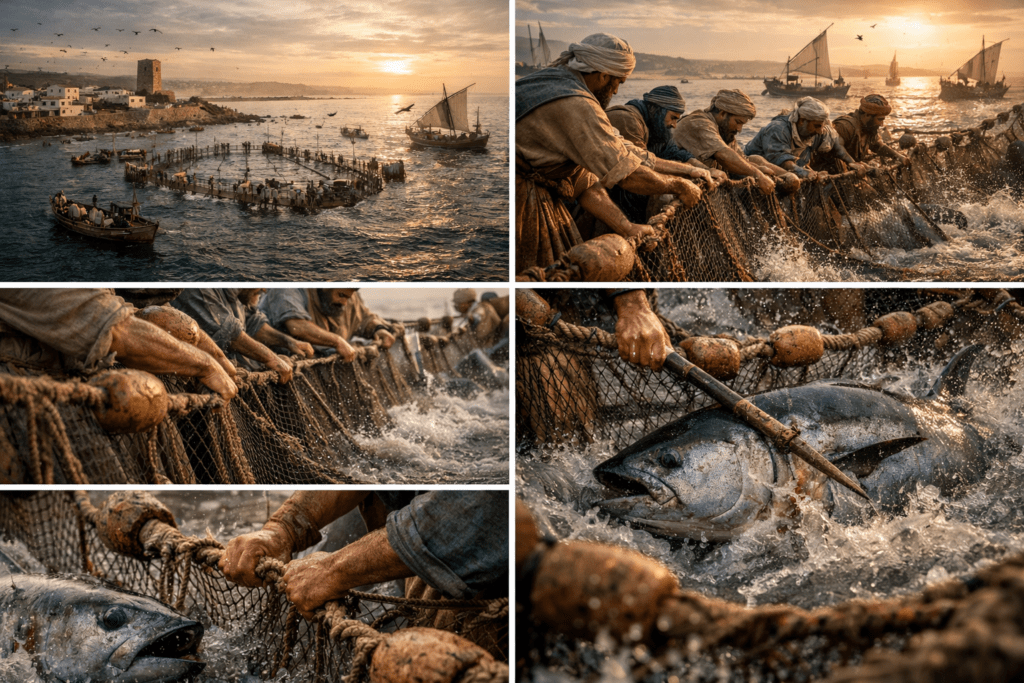
La almadraba es un arte de pesca tradicional basado en un laberinto de redes fijas cerca de la costa. El atún entra siguiendo su ruta migratoria y acaba llegando al copo, que es la parte final del entramado. El momento más conocido es la levantá: cuando las redes suben, el agua se mueve, el trabajo se acelera y se ve de verdad que detrás de este producto hay técnica, experiencia y mucho respeto por el mar.
Cuándo empieza la temporada del atún rojo
La temporada está muy unida a la primavera. Precisamente por eso el atún rojo de almadraba conserva esa idea de producto esperado, con momento propio, y no de género sin contexto.
Por qué Cádiz entiende el atún de otra manera
El atún rojo de almadraba tiene tanta fuerza en la cocina porque no se valora solo por su sabor, sino por todo lo que arrastra detrás: temporada, cultura local y una manera de trabajar el producto que en Cádiz forma parte de la vida. De ahí salen platos muy de siempre, como el atún encebollado, el atún en tomate, la mojama o la hueva, pero también cortes y preparaciones que hoy se leen de forma más actual.
La levantá y el valor del oficio
La levantá no es solo una imagen bonita: resume trabajo, coordinación y conocimiento del mar. Por eso sigue siendo uno de los momentos más reconocibles de la cultura almadrabera.
De la costa gaditana a una mesa como la nuestra
Lo interesante es que esa cultura del producto no se entiende solo en la costa. También se aprecia lejos del mar cuando se trabaja con tiempo, con criterio y sin disfrazar demasiado lo que ya es bueno por sí mismo. En El Jardín de Vianos esa idea encaja bien con algunas elaboraciones de nuestra carta, como el atún curado y ahumado en casa o el Tomate de Mar, donde pueden aparecer salazones y pescados como hueva de maruca o atún ahumado según mercado.
No se trata de copiar Cádiz en la Sierra. Se trata de reconocer el valor de una tradición que ha sabido convertir un producto excepcional en cocina, memoria y temporada. Y también de entender que cuando un ingrediente llega a la mesa con historia detrás, se nota. La almadraba sigue fascinando por eso: porque no solo alimenta, también cuenta algo.
Creado y editado por Miguel Delgado Paris ·
El Jardín de Vianos
👍 Si te gustó, déjanos un like en Facebook:
Facebook
The tuna almadraba in Cádiz: a tradition that still reaches the table
Talking about the almadraba in Cádiz is not just talking about fishing. It is about timing, craft and a very specific way of understanding bluefin tuna. Every spring, when the fish move from the Atlantic into the Mediterranean, the Cádiz coast starts looking at the sea differently. That is when a short but eagerly awaited season begins, deeply tied to places such as Barbate, Conil, Tarifa and Zahara de los Atunes.
What exactly is the almadraba
The almadraba is a traditional fishing system based on a maze of fixed nets set close to the shore. The tuna follow their migratory route and end up reaching the copo, the final part of the structure. The best-known moment is the levantá: the nets rise, the water turns wild and the work becomes intense. That is when you really see that this product is backed by technique, experience and deep respect for the sea.
When bluefin tuna season begins
The season is closely linked to spring. That is exactly why almadraba bluefin still keeps that sense of being a long-awaited product with its own moment, rather than something disconnected from place and time.
Why Cádiz understands tuna differently
Bluefin tuna from almadraba has such a strong place in the kitchen because it is valued not only for its flavour, but for everything behind it: seasonality, local culture and a way of handling the product that is part of daily life in Cádiz. From there come classic dishes such as tuna with onions, tuna in tomato sauce, mojama or cured roe, but also cuts and preparations now read in a more modern way.
The levantá and the value of craft
The levantá is not only a striking image: it sums up labour, coordination and knowledge of the sea. That is why it remains one of the clearest symbols of almadraba culture.
From the Cádiz coast to a table like ours
What is interesting is that this product culture is not meaningful only on the coast. It also makes sense far from the sea when food is handled with time, judgement and without hiding what is already good on its own. At El Jardín de Vianos, that idea fits naturally with dishes on our menu such as our house-cured and smoked tuna or Tomate de Mar, where cured seafood products and fish such as hake roe or smoked tuna may appear depending on the market.
This is not about copying Cádiz in the Sierra. It is about recognising the value of a tradition that has turned an exceptional ingredient into cuisine, memory and season. And it is also about understanding that when an ingredient reaches the table with a story behind it, you can tell. That is why almadraba still fascinates people: it does not only feed you, it also says something.
Created and edited by Miguel Delgado Paris ·
El Jardín de Vianos
👍 If you enjoyed this, please leave us a like on Facebook:
Facebook